

For decades, Cambodia’s economic success story has been closely associated with labor-intensive industries such as garments, footwear, and basic manufacturing. Today, however, the country is attempting something far more ambitious: positioning itself as a regional destination for advanced manufacturing, electric vehicle (EV) supply chains, and technology-driven services.
That ambition was on full display during a recent investment promotion mission to South Korea led by Deputy Prime Minister Sun Chanthol, First Vice-Chairman of the Council for the Development of Cambodia (CDC). The high-level delegation’s objective was clear—to attract long-term strategic investment capable of accelerating Cambodia’s transition toward a higher-value economy.
Building on Existing Industrial Foundations
Rather than relying solely on greenfield investments, Cambodia is leveraging the success of existing South Korean manufacturers already operating in the Kingdom.
During meetings with executives from Daejoo KC Group, Cambodian officials encouraged the conglomerate to expand beyond its current operations and explore opportunities in metallurgy, chemicals, and energy-related industries. Such sectors are increasingly viewed as essential building blocks for future industrial development and regional supply chain integration.
The delegation also visited Kyungshin Co., Ltd., a global supplier of automotive electrical systems and EV components. The company’s manufacturing operations in Kandal Province offer a compelling example of Cambodia’s growing capacity to host sophisticated industrial production.
For policymakers, Kyungshin’s presence serves as more than an investment success story. It demonstrates that Cambodia can support precision manufacturing, automotive electronics, and increasingly complex industrial processes—critical prerequisites for participation in the rapidly expanding EV ecosystem.
Beyond Manufacturing: A Push into Digital Healthcare
Cambodia’s economic diversification strategy extends beyond factory floors.
Recognizing that sustainable development requires knowledge transfer alongside capital investment, the delegation engaged with South Korean healthcare institutions, including Incheon Baek Hospital. Discussions focused on medical technology, healthcare management systems, professional training, and opportunities for collaboration between Cambodian and South Korean medical specialists.
The initiative reflects a broader government objective: improving domestic healthcare infrastructure while developing the human capital required for a more sophisticated economy.
As Cambodia seeks to attract international investors, access to modern healthcare services and skilled professionals increasingly forms part of the country’s overall competitiveness proposition.
Investment Incentives as a Competitive Advantage
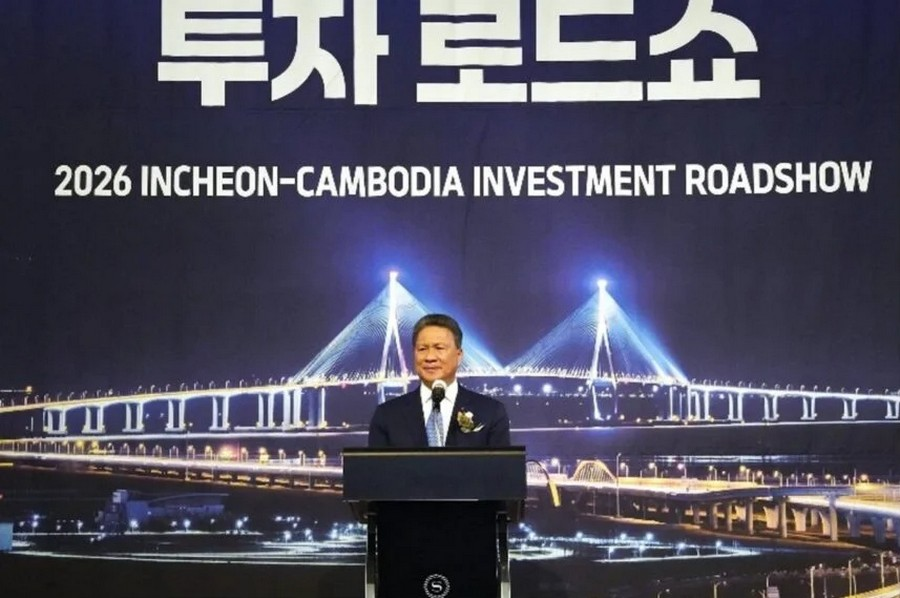
At the 2026 Incheon-Cambodia Investment Roadshow, Cambodian officials highlighted the country’s evolving investment framework, emphasizing protections and incentives available under the new Law on Investment of the Kingdom of Cambodia.
The legislation offers investors a combination of fiscal incentives, investment guarantees, and streamlined approval processes designed to enhance Cambodia’s attractiveness relative to neighboring markets.
At a time when multinational companies are actively diversifying supply chains across Southeast Asia, Cambodia is positioning itself as a viable alternative for manufacturers seeking both cost competitiveness and long-term growth potential.
The Challenges of Industrial Upgrading
The transition from labor-intensive manufacturing to technology-driven industries is not without obstacles.
Producing garments and assembling EV components require fundamentally different capabilities. Advanced manufacturing depends on highly skilled technicians, reliable industrial power infrastructure, rigorous quality-control systems, and integrated logistics networks capable of supporting complex supply chains.

Developing these foundations will require substantial public and private investment over the coming decade.
The success of Cambodia’s diversification strategy will therefore depend not only on attracting foreign capital but also on expanding technical education, strengthening infrastructure, and improving workforce productivity.
A Strategic Inflection Point
Cambodia’s outreach to South Korean investors signals more than a routine investment promotion campaign. It reflects a broader national strategy to move higher up the global value chain and reduce dependence on traditional manufacturing sectors.
By leveraging established industrial partnerships, strengthening investment protections, and targeting emerging sectors such as EV technology and digital healthcare, Cambodia is attempting to position itself for the next phase of Southeast Asia’s economic transformation.
Whether the country can fully capitalize on this opportunity will depend on its ability to address structural challenges while maintaining the investor confidence that has fueled its growth over the past two decades. But the direction is increasingly clear: Cambodia is no longer competing solely as a low-cost manufacturing destination—it is seeking a role in the region’s future industrial and technological landscape.