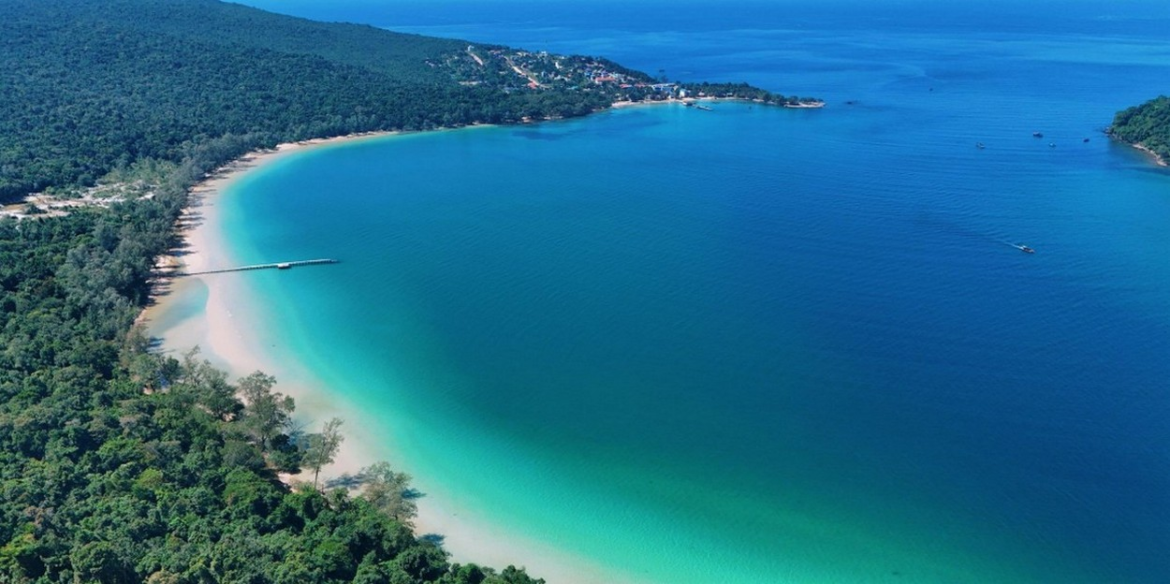
Among the latest investment opportunities emerging in Cambodia, one project stands out for its ambition. Rather than offering a standalone villa or condominium, this development proposes something much larger—the creation of an entirely new resort destination on Koh Rong Sanloem Island.
The master plan combines luxury villas, beachfront bungalows, hotels, commercial facilities, and supporting infrastructure into a single integrated tourism ecosystem. Investors are not simply purchasing real estate; they are participating in the early-stage development of what could become one of Cambodia’s future island destinations.
That distinction is important. Koh Rong Sanloem is not yet comparable to established resort markets such as Phuket or Bali. It remains in the early phases of development, presenting both significant upside potential and a higher level of investment risk.
Built from the Ground Up
According to the developer,
- the project covers a total land area of 1,066 hectares
- with 399 hectares designated for development
- the first construction phase includes approximately 38,700 square meters
- comprising 35,000 square meters of residential space
- and 3,700 square meters of commercial facilities.
The first release includes a limited number of beachfront properties:
- Princess Bungalow
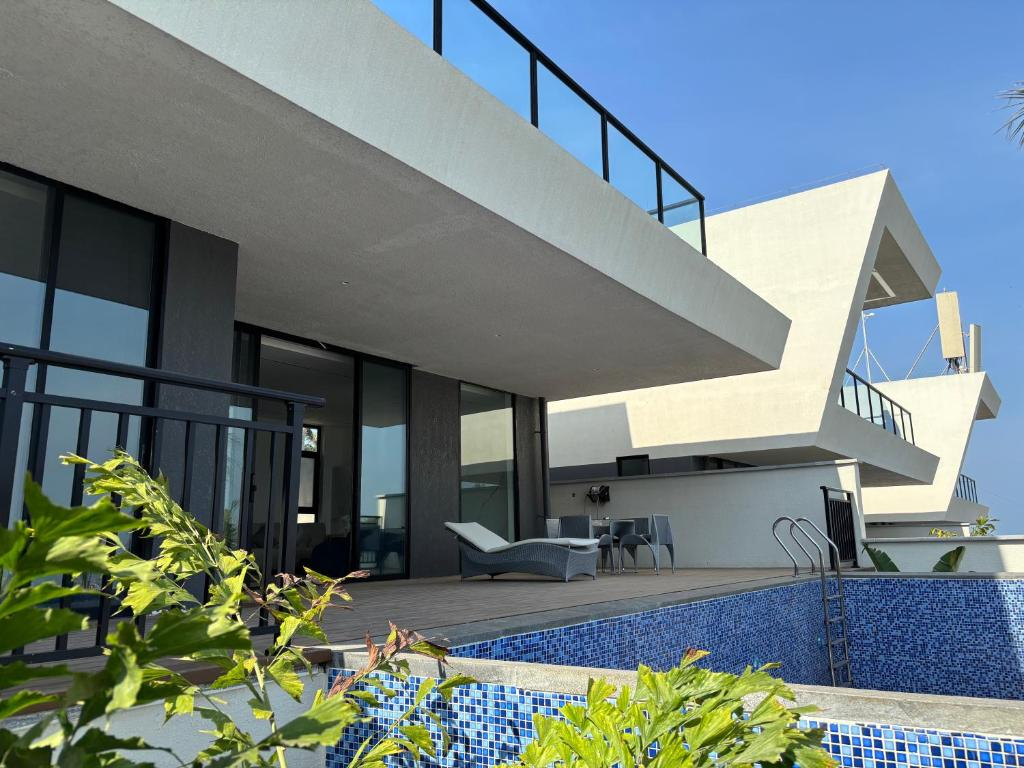
- Prince Villa
- Queen Villa
- King Estate
Unlike conventional residential developments, these properties are designed to operate as part of a professionally managed resort.
How the Investment Model Works
The project follows a hospitality investment model rather than a traditional buy-to-live or buy-to-rent approach. After purchase, each property enters the resort’s unified hotel management program.
The developer states that investors receive a guaranteed annual return of 8% during the first three years. Following this period, the investment transitions to a profit-sharing model, with owners receiving 50% of the operating profit generated by their property.
The management agreement spans 12 years:
- Years 1–3: fixed 8% annual return (as declared by the developer)
- Years 4–12: 50% share of operational profits
During this management period, the villa functions as part of the resort’s hotel inventory rather than as a privately operated residence. Owners are therefore investing not only in real estate but also in the performance of a hospitality business.

Advantages of the Managed Resort Model
For many investors, professional management is one of the project’s strongest selling points. Property owners are not responsible for marketing, reservations, guest services, housekeeping, staffing, or day-to-day operations. These functions are managed centrally by the resort operator.
If the destination develops successfully and attracts sustained visitor demand, owners benefit from a professionally operated hospitality business without being directly involved in its management.
Key Risks to Consider
The long-term performance of the investment depends on much more than the quality of the villas. Its success will ultimately rely on the resort’s ability to establish Koh Rong Sanloem as a desirable tourism destination capable of attracting consistent visitor numbers.
Investors therefore become dependent on several critical factors, including:
- the quality and experience of the hotel operator;
- tourist arrivals and occupancy rates;
- operational efficiency;
- management costs;
- infrastructure development on the island; and
- overall destination growth.
The central investment question is not whether the villas are attractive—they are—but whether the project can generate sustainable tourism demand over the long term.
Project Strengths
The development offers several characteristics that differentiate it from traditional real estate investments:
- rare beachfront island property;
- limited coastal land supply;
- early entry into an emerging tourism market;
- potential for long-term capital appreciation;
- professionally managed hospitality operations; and
- diversification beyond conventional urban residential assets.
Due Diligence Is Essential
Before making an investment decision, buyers should carefully review several legal and financial aspects of the project, including:
- land ownership structure;
- leasehold terms and renewal conditions;
- resale rights during the management period;
- owner usage rights;
- the legal entity guaranteeing the advertised 8% return;
- the source of funds used to support that guarantee;
- the methodology for calculating operational profits after Year 3;
- management fees and operating expenses deducted before profit distribution;
- reporting transparency and audit procedures;
- performance under lower occupancy scenarios; and
- contingency plans if infrastructure development is delayed.
Investment Perspective
This is not a conservative income-producing property comparable to a rental apartment in Phnom Penh. Instead, it represents participation in the development of an emerging resort destination through real estate ownership.
The investment thesis is straightforward: beachfront island land is inherently limited, and if Koh Rong Sanloem evolves into a mature tourism market, early investors may benefit from both capital appreciation and hospitality income.
However, higher potential returns are accompanied by higher uncertainty. Project execution, infrastructure delivery, tourism growth, management quality, and financial transparency will all play critical roles in determining long-term performance.
Svyatoslav Bazanov about the project / video in russian language:
Who May Find This Investment Attractive? This project may appeal to:
- investors comfortable with early-stage developments;
- buyers seeking a rare island asset;
- those who do not intend to occupy the property full-time;
- long-term investors willing to wait for destination growth; and
- investors looking to diversify beyond traditional urban real estate.
The project may be less suitable for investors who:
- require predictable monthly rental income;
- expect unrestricted personal use of the property;
- prefer low-risk investment structures;
- are uncomfortable with hospitality-sector risks; or
- prioritize highly conservative real estate investments.
Final Thoughts
The Koh Rong Sanloem resort development represents a distinctive opportunity within Cambodia’s evolving real estate market. Rather than purchasing a conventional residential property, investors are participating in the creation of an entirely new tourism destination.
That opportunity carries meaningful upside, particularly given the scarcity of premium island land. At the same time, success will depend on effective execution, transparent management, and the island’s ability to attract sustainable tourism over the coming years.
For investors who understand the dynamics of early-stage resort development, this project offers exposure to a unique segment of Cambodia’s growing hospitality and real estate sectors.