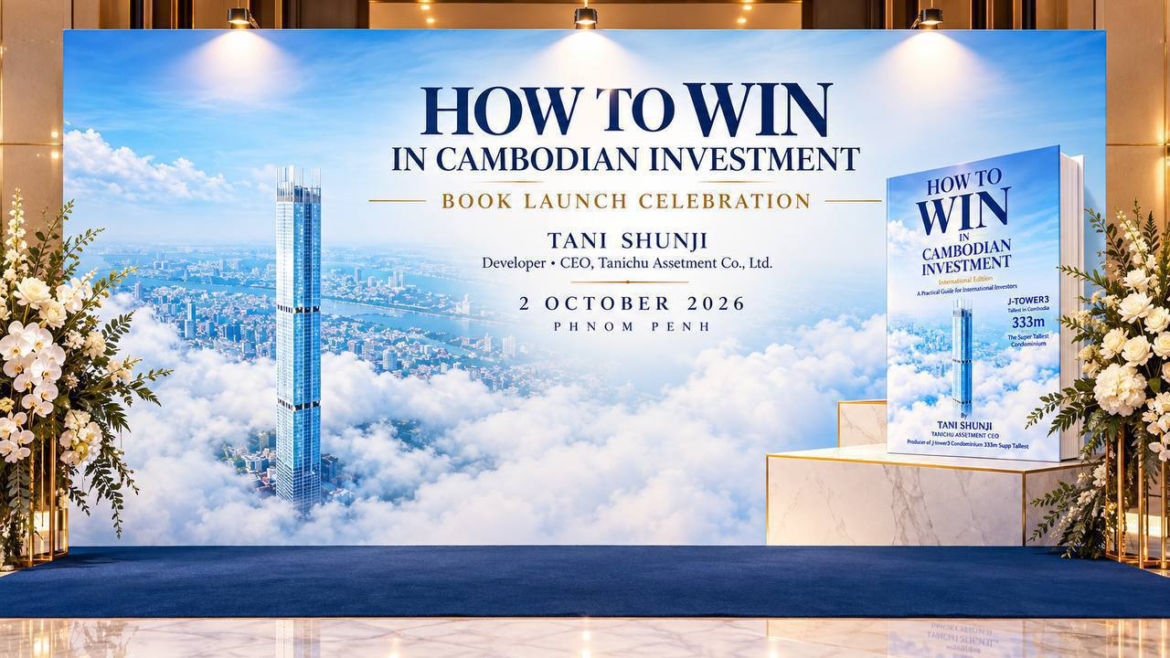
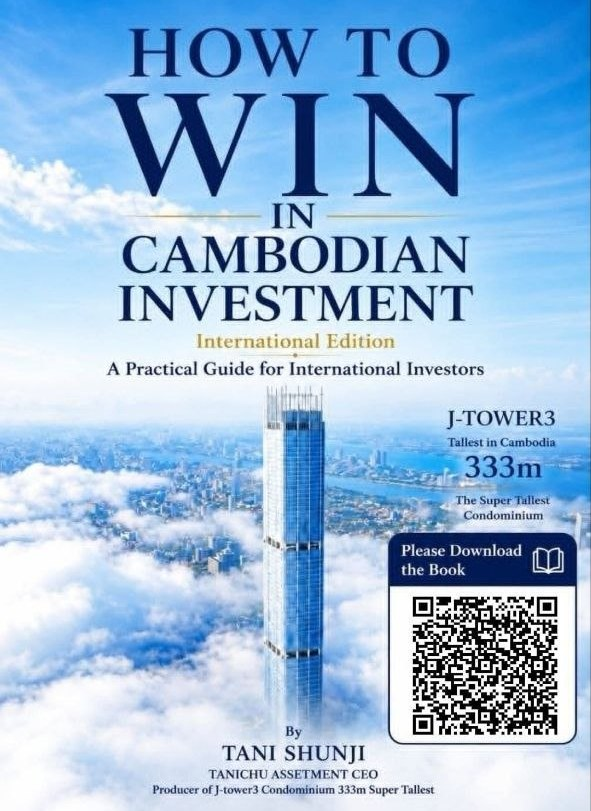
“How to Win in Cambodian Investment” is more than a book about real estate. It is a practical account of how to operate, invest, and build a business successfully in a rapidly developing market. Drawing on the author’s firsthand experience in Cambodia, the book combines investment principles, lessons in leadership, and the story behind the development of the J Tower projects in Phnom Penh.
One of the book’s strongest qualities is its pragmatic approach. The author does not portray Cambodia as an easy market where economic growth automatically guarantees profits. On the contrary, he repeatedly emphasizes that opportunity and risk exist side by side. A growing population, openness to foreign capital, widespread use of the U.S. dollar, and continuing urban development make Cambodia attractive, but investors still need to understand legal rights, local business practices, property management, and the reliability of their partners.
The central philosophy of the book can be summarized in one principle: make decisions based on firsthand knowledge and take responsibility for the outcome. The author strongly warns against relying blindly on brokers, consultants, impressive titles, online information, or promises of guaranteed returns. Investors should visit the country themselves, study locations, examine completed projects, verify documentation, understand actual demand, and make their own judgments.
This makes the book particularly useful for anyone considering overseas real estate. Instead of concentrating only on projected rental yields or capital appreciation, it asks more fundamental questions:
- Will the building actually be completed?
- Will the buyer receive secure legal title?
- Is the location supported by genuine demand?
- Who will manage the property after completion?
- Will the developer remain involved after the sale?
The discussion of property management is especially valuable. One of the book’s most important ideas is that an investor is not simply buying an apartment; the investor is also effectively buying the quality of its management. Construction quality matters, but so do security, maintenance, tenant selection, common facilities, repairs, and the long-term operation of the building. This is an important distinction that is often overlooked when overseas properties are marketed primarily through attractive renderings and promised returns.
The chapters devoted to J Tower 2 and J Tower 3 give the book a more personal and compelling dimension. They show how the author’s investment philosophy was applied to actual development projects. J Tower 2 demonstrates the importance of location, product quality, disciplined construction, and long-term management. The account also describes the challenges of developing the project during the COVID-19 pandemic and dealing with construction, staffing, and operational difficulties.
J Tower 3 represents a much larger ambition. Planned as a landmark skyscraper in Phnom Penh, the project illustrates the progression from simply developing real estate to attempting to create something with broader significance for the city. The author’s principle of “living first, investment second” is particularly noteworthy. Rather than beginning with the question of how to sell units to investors, the concept begins with creating a residence in which successful people would genuinely want to live. The argument is that sustainable investment value should follow genuine residential value — not the other way around.
The book is also, fundamentally, about leadership. Its recurring message is that responsibility cannot always be delegated. When serious problems arise, particularly in an overseas market, the person making the major decisions must sometimes be physically present, act decisively, and accept responsibility for the consequences. Trust, in the author’s view, is accumulated through repeated actions: completing projects, honoring commitments, protecting customers, managing properties properly, and remaining accountable after a sale.
Another strength of the book is its treatment of Cambodian society and business culture. The author rejects two opposite mistakes: underestimating Cambodia because it is a developing country, and romanticizing it because people may appear welcoming and friendly. Successful business requires respect for local people while maintaining clear professional standards for quality, responsibility, punctuality, and performance.
Stylistically, the book is straightforward and accessible. It does not attempt to present itself as an academic study of Cambodia. Its value comes instead from experience and from a clear set of principles developed through years of operating in the country. Some of the author’s conclusions are naturally shaped by his own business experience and should therefore be considered alongside independent legal, financial, and market research. In fact, that is entirely consistent with the book’s own message: never accept another person’s information uncritically.
Overall, “How to Win in Cambodian Investment” is a useful introduction for foreign investors, entrepreneurs, real estate professionals, and anyone interested in understanding how business is actually conducted in Cambodia. Its lessons also extend beyond Cambodia. The importance of primary information, due diligence, local knowledge, disciplined management, respect for local partners, financial resilience, and personal accountability applies to investment in many emerging markets.
The book ultimately offers a definition of “winning” that goes beyond making money on a single transaction. Winning means building credibility, earning trust, creating lasting value, and developing a reputation strong enough that customers, partners, and institutions are willing to work with you again.
That may be the book’s most persuasive message: long-term success in an emerging market is rarely created by one brilliant decision. It is built through a series of responsible decisions, promises kept, and fundamentals executed consistently over time.
“How to win in Cambodian Investment” / please, download the book:
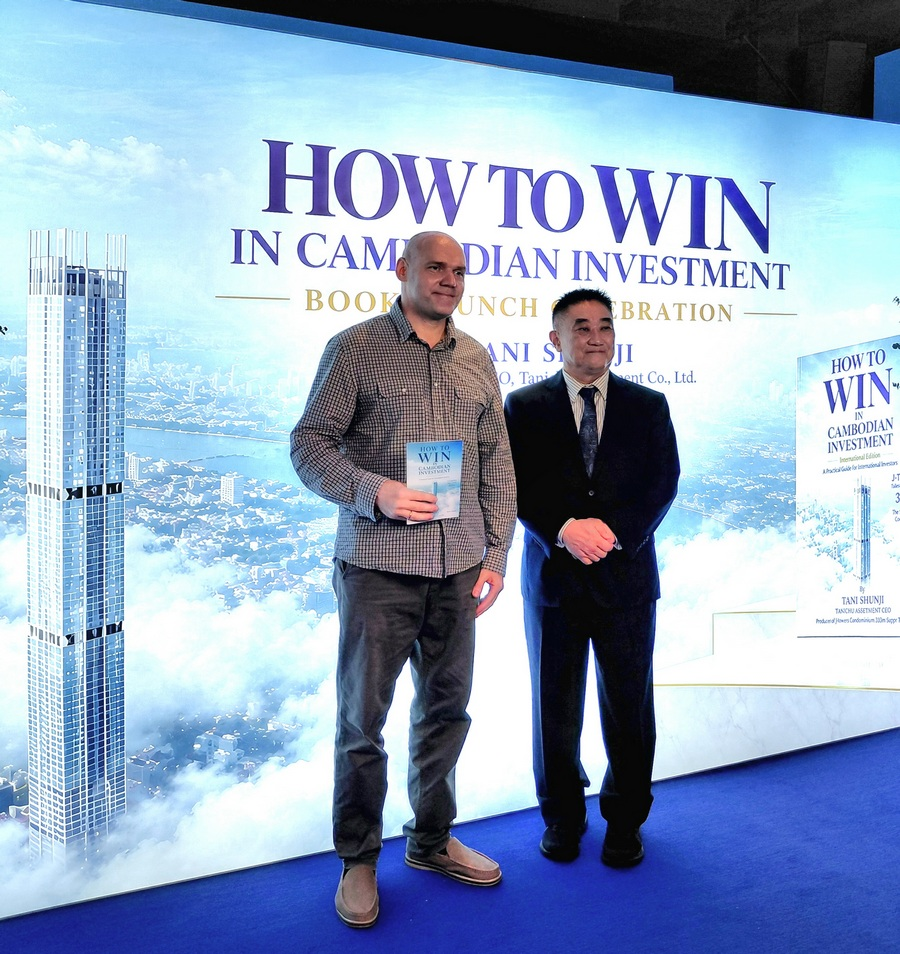
We had the pleasure of meeting Mr. Tani Shunji, developer of Tanichu Assetment Co., and celebrating the official launch of his book, “How to Win in Cambodian Investment.”
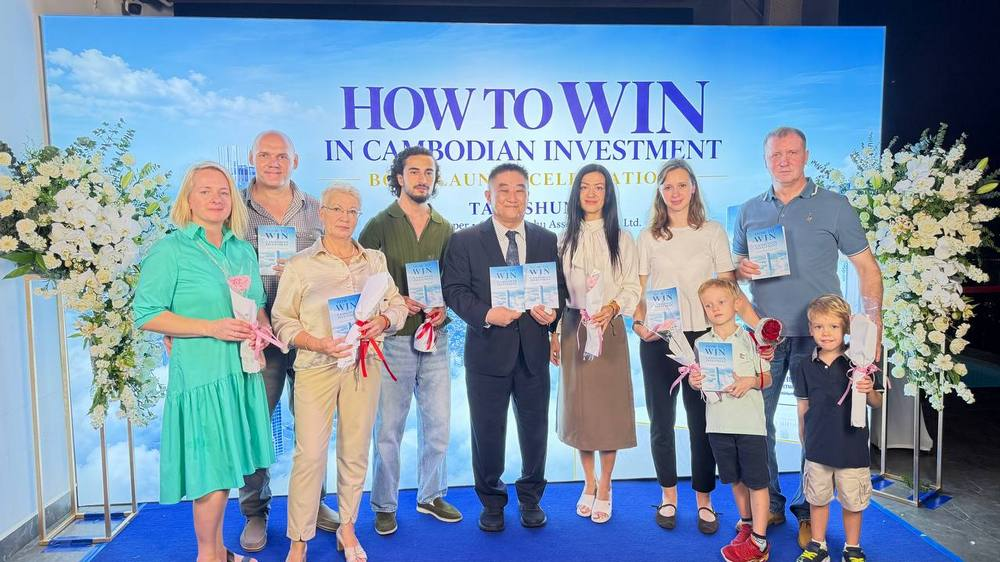
The evening featured the book presentation, a photo session, delicious sushi & sashimi, wine and cocktails, great music, and a DJ — all set against the spectacular views from the 42nd floor of J-Tower 2. And a wonderful finishing touch: every guest received a complimentary copy of the book. A memorable evening filled with great conversations, new connections, and insights into investment opportunities in Cambodia.