
Cambodia is entering a new stage of economic development, creating significant opportunities for investors looking for growth, diversification and access to Southeast Asian markets.
With a strategic location, a young workforce, expanding infrastructure, Special Economic Zones, investment incentives and an increasingly diversified economy, Cambodia is positioning itself as a competitive destination for both domestic and foreign investment. The country’s investment framework is designed to attract quality investment and support long-term socio-economic development.
A Growing Economy and Strong Investment Momentum
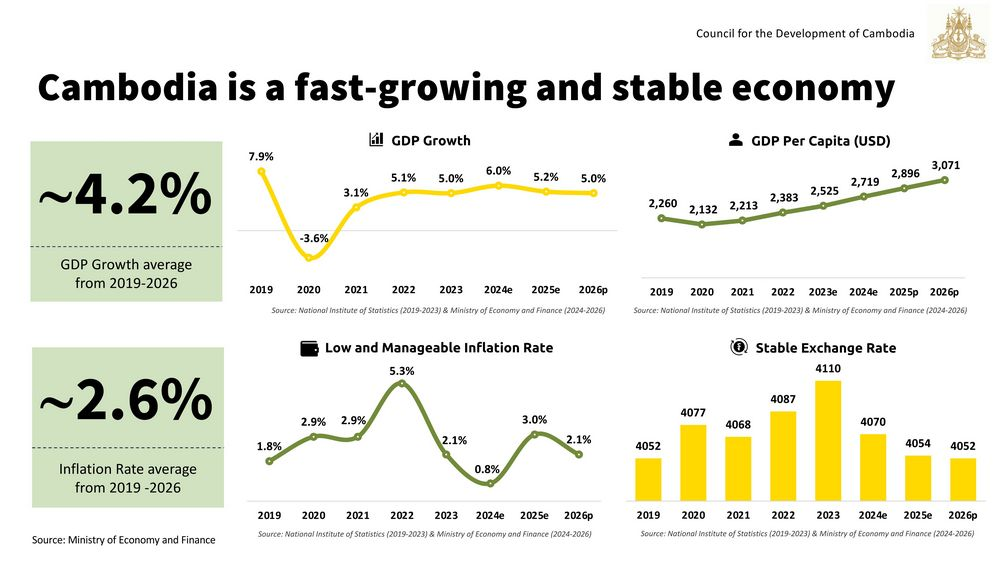
Cambodia has demonstrated economic resilience and continued growth. According to data presented by the Council for the Development of Cambodia, average GDP growth for 2019–2026 is estimated at approximately 4.2%, while average inflation over the same period is around 2.6%. GDP per capita is projected to increase from USD 2,260 in 2019 to USD 3,071 in 2026.
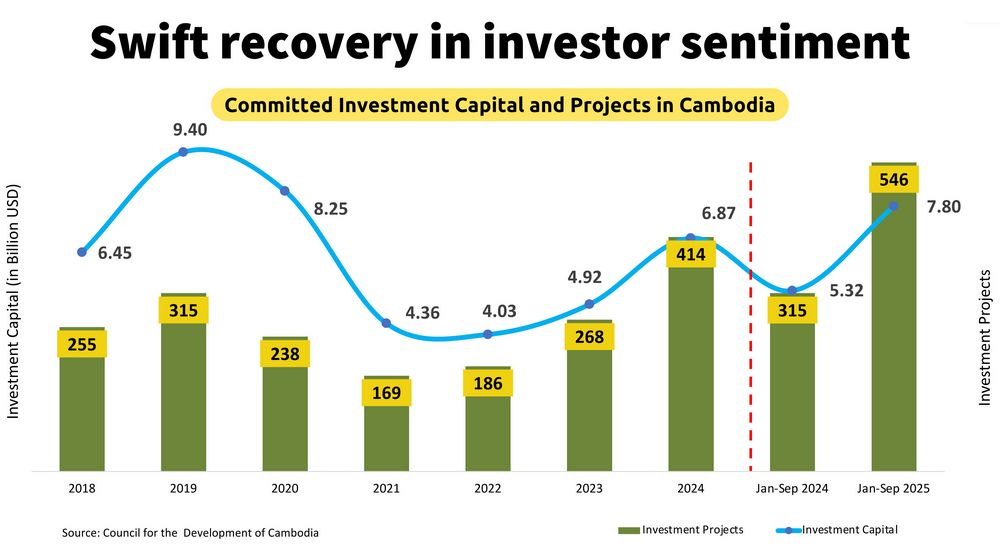
Investor activity has also accelerated. In January–September 2025 alone, 546 investment projects representing approximately USD 7.8 billion in committed investment capital were recorded, compared with 315 projects and USD 5.32 billion during the same period of 2024.
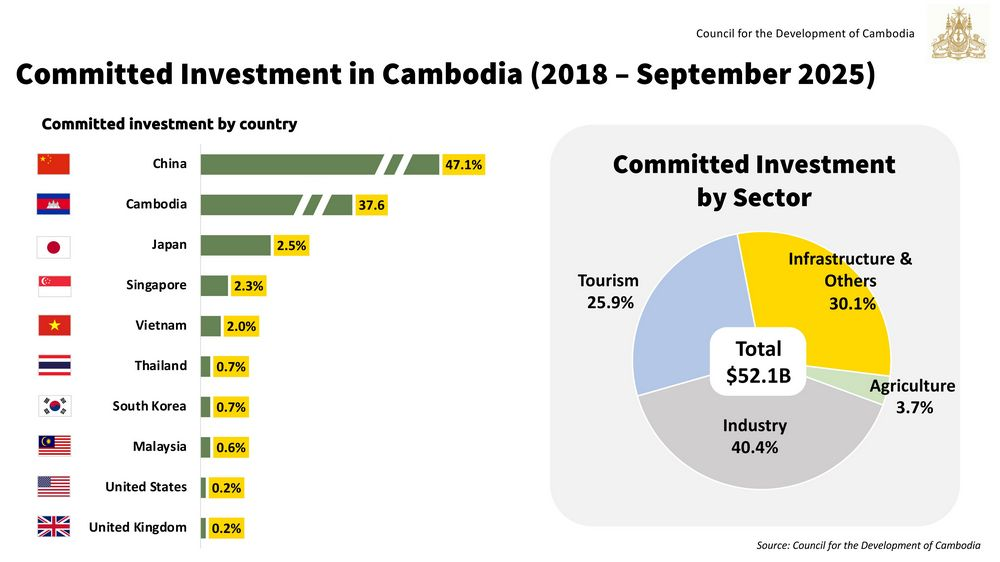
Looking at the longer period from 2018 through September 2025, total committed investment reached approximately USD 52.1 billion. Industry represented 40.4% of committed investment, infrastructure and other sectors 30.1%, tourism 25.9%, and agriculture 3.7%.
Priority Sectors for Investment
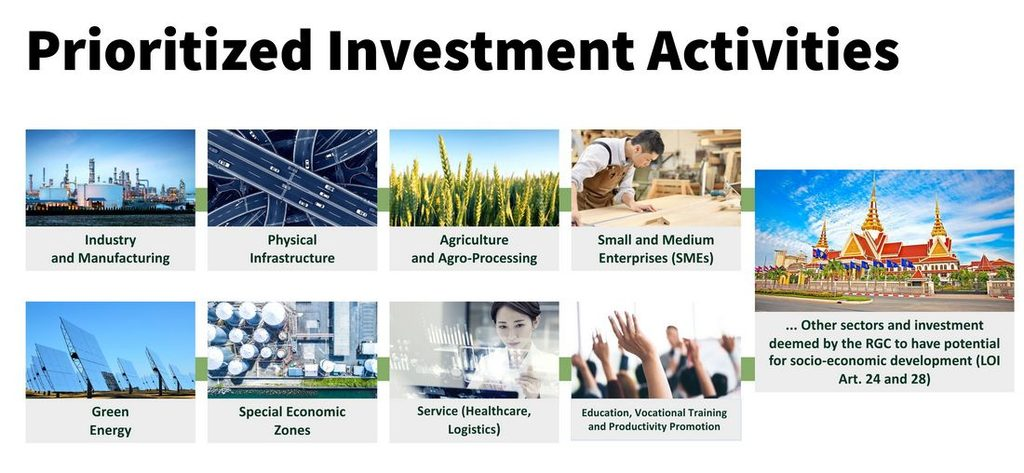
Cambodia’s investment framework identifies a broad range of priority activities, including:
Industry and manufacturing • physical infrastructure • agriculture and agro-processing • SMEs • green energy • Special Economic Zones • healthcare and logistics • education and vocational training • productivity development.
The CDC presentation particularly highlights opportunities in automotive and electronics, agri-food, tourism and hospitality, healthcare, and physical infrastructure.
Automotive & Electronics
Cambodia aims to develop into an integrated automotive and electronics components manufacturing hub.
Opportunities identified in the presentation include wire harnesses, automotive seats, simpler automotive components, two-wheeler supply chains, PCB assembly, cables and connectors. The CDC also points to opportunities in upstream raw materials because domestic production supporting these industries remains relatively limited.
Cambodia already has manufacturers and assemblers operating across different parts of the automotive and electronics value chains. This creates potential for additional investment in materials, components, sub-assembly and supporting industries.
Agriculture & Agri-Food
Agriculture remains another major area of opportunity.
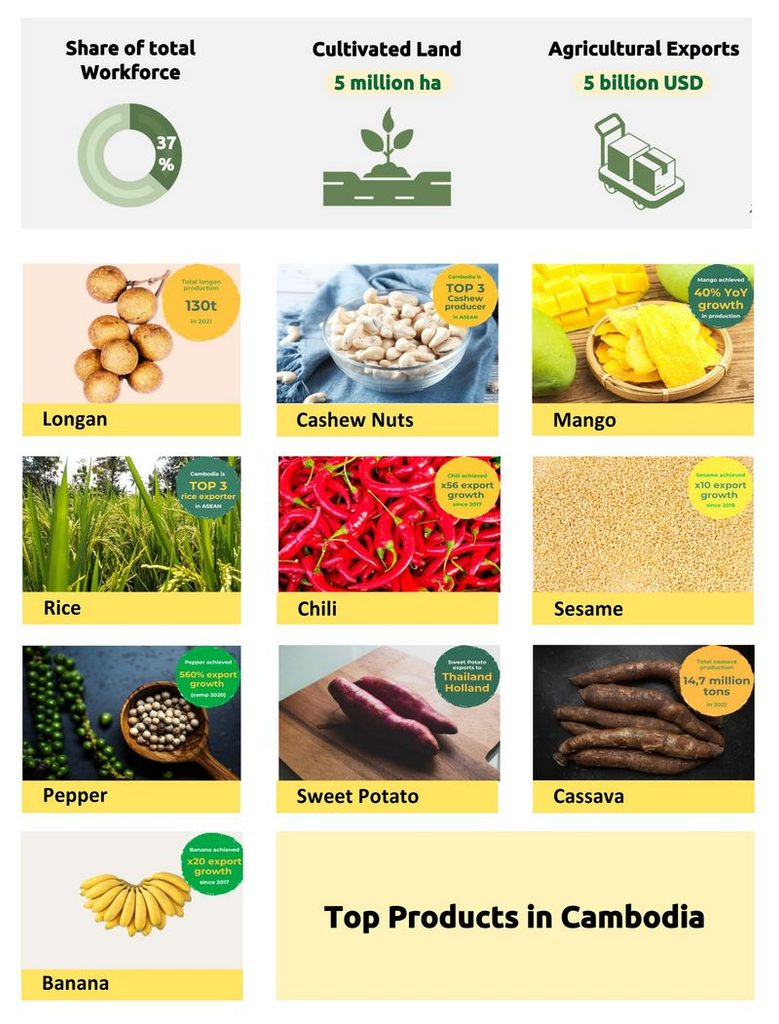
According to the presentation, the agricultural sector accounts for 37% of the workforce, with approximately 5 million hectares of cultivated land and agricultural exports of around USD 5 billion, based on 2022–2023 data.
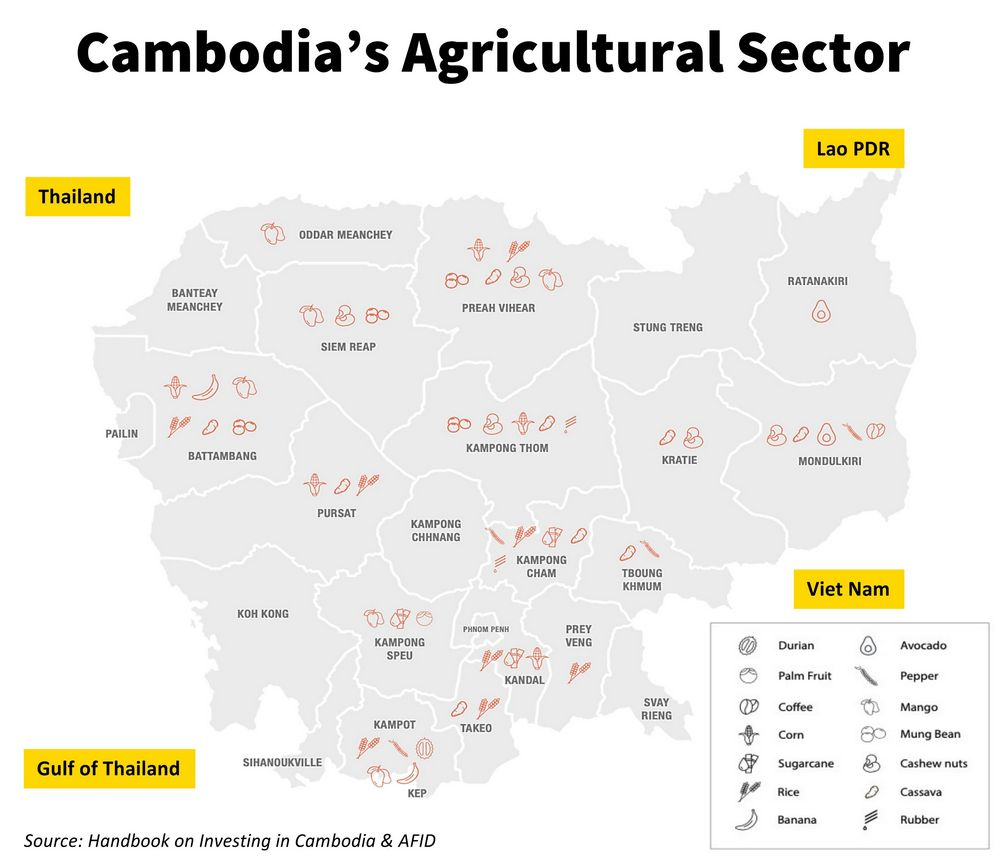
Key products include rice, cassava, cashew nuts, mango, banana, pepper, longan, sesame, chili and sweet potato.
The opportunity extends beyond farming itself. The agri-food value chain presented by the CDC includes fertilizers, pesticides and animal feed, plantations and livestock, food and beverage processing, as well as packaging. This creates possibilities for investors interested in moving Cambodian agricultural production further up the value chain.
Tourism & Hospitality
Cambodia’s cultural heritage and natural attractions continue to support opportunities in tourism and hospitality. The country received 6.7 million international tourists in 2024, an increase of 23% compared with 2023, according to the presentation.
Transportation infrastructure is also expanding. The presentation highlights Techo International Airport and Siem Reap–Angkor International Airport, together with plans for additional airports and direct international connections. These developments can create further opportunities for hotels, resorts, hospitality services and tourism-related infrastructure.
Healthcare
Healthcare is another sector identified for investment.
The CDC presentation highlights opportunities in pharmaceuticals, health supplements, medical equipment and international hospitals. Rising demand for healthcare services, private hospitals and imported pharmaceutical and medical products creates opportunities for investors looking at both manufacturing and service delivery.
Infrastructure: 174 Projects and USD 36.7 Billion in Investment Needs
Cambodia’s infrastructure development plans represent another significant investment area.
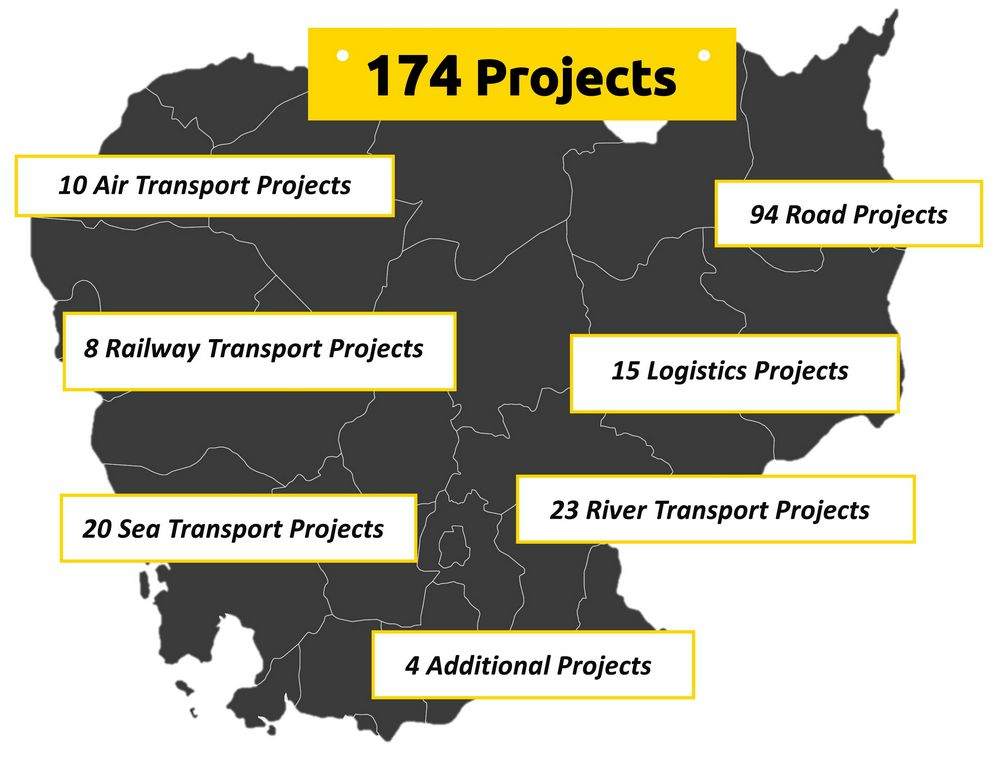
The Comprehensive Master Plan on Cambodia Intermodal Transport and Logistics System 2023–2033 identifies approximately USD 36.7 billion in required investment for 174 key projects across the country.
These include 94 road projects, 23 river transport projects, 20 sea transport projects, 15 logistics projects, 10 air transport projects, 8 railway projects and 4 additional projects.
Special Economic Zones
Cambodia has also developed an extensive network of Special Economic Zones.
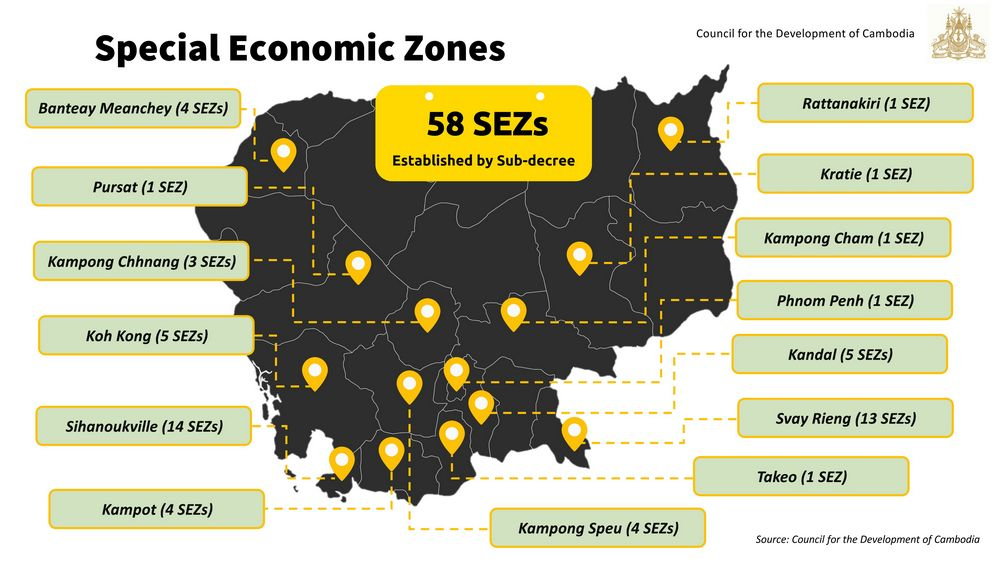
The presentation identifies 58 SEZs established by sub-decree across the country.
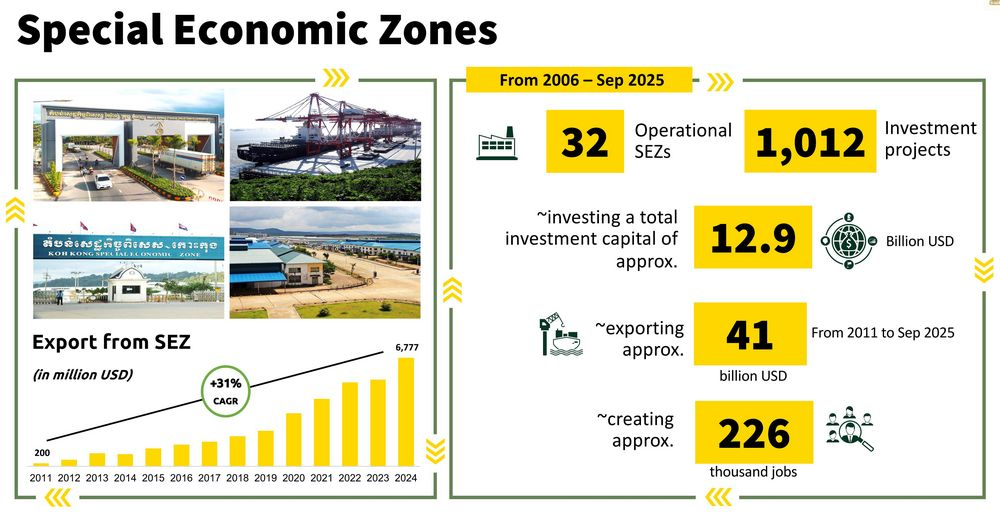
As of September 2025, 32 SEZs were operational, hosting 1,012 investment projects with approximately USD 12.9 billion in total investment capital and creating around 226,000 jobs. Exports from SEZs from 2011 to September 2025 were approximately USD 41 billion.
For manufacturers and export-oriented companies, SEZs can therefore play an important role in Cambodia’s industrial and supply-chain ecosystem.
Investment Incentives
According to Article 24 of the Law on Investment of the Kingdom of Cambodia, 19 sectors and activities are entitled to investment incentives:
- High-tech industries involving innovation or research and development;
- Innovative or highly competitive new industries or manufacturing with high added value;
- Industries supplying regional and global production chains;
- Industries supporting agriculture, tourism, manufacturing, regional and global production chains and supply chains;
- Electrical and electronic industries;
- Spare parts, assembly, and installation industries;
- Mechanical and machinery industries;
- Agriculture, agro-industry, agro-processing industry, and food processing industries serving the domestic market or export;
- Small and medium-sized enterprises in priority sectors and small and medium-sized enterprise cluster development, industrial parks, and science, technology, and innovation parks;
- Tourism and tourism-related activities;
- Special economic zones;
- Digital industries;
- Education, vocational training, and productivity promotion;
- Health;
- Physical infrastructure;
- Logistics;
- Environmental management and protection, biodiversity conservation, and the circular economy;
- Green energy, technology contributing to climate change adaptation and mitigation;
- Other sectors and investment activities not listed by this Law deemed by the Royal Government of Cambodia to have the potential for socio-economic development.
Cambodia’s Law on Investment establishes a framework intended to be open, transparent, predictable and favorable to investment by both Cambodian and foreign investors.
Depending on the category and qualification of an investment project, incentives described in the presentation include income-tax exemptions of 3, 6 or 9 years, followed by a progressive transition period, as well as special depreciation and deductions for certain qualifying expenses.
Certain Qualified Investment Projects may also receive exemptions from customs duties, special tax and VAT on eligible imports such as construction materials, construction equipment, production equipment and production inputs, subject to the applicable conditions.
Additional incentives described by the CDC include 0% VAT on purchases of local production inputs and a 150% deduction from the tax base for qualifying expenditure related to areas such as R&D and innovation, employee training, worker facilities, machinery upgrades, employee welfare and waste-treatment infrastructure.
Investment Protection
The investment framework also provides a number of protections highlighted in the presentation, including non-discrimination, protection of intellectual property, protection against nationalization and expropriation, no price control on products or services, after-care services for investment, and no restriction on the remittance of profits and capital.
Strategic Access to Regional Markets
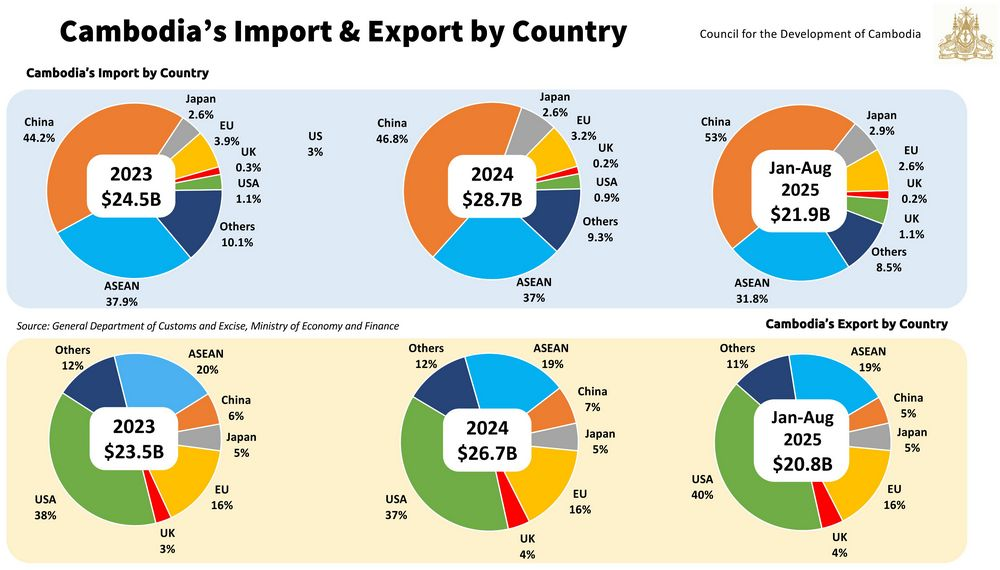
Cambodia’s geographical position provides access to the Greater Mekong Subregion and the wider Asia-Pacific market.
The country is connected to international markets through airports, the ports of Sihanoukville and Phnom Penh, and road links with Thailand, Vietnam and Laos. Cambodia also participates in major trade arrangements including RCEP, ASEAN FTA and the Cambodia–China FTA, supporting deeper integration into regional and global supply chains.
Young Workforce and Skills Development
Human capital is another important part of Cambodia’s investment proposition.
Approximately 60% of the population is under 35, while the workforce represents approximately 63% of the total population. The presentation also reports more than 97,000 technical graduates between 2019 and 2023.
Cambodia’s Skills Development Fund supports pre-employment training, upskilling and reskilling through public-private co-financing, with sectors including manufacturing, electronics, ICT, construction and tourism.
Growing Focus on Renewable Energy
Energy development is also becoming increasingly important for Cambodia’s future investment landscape.
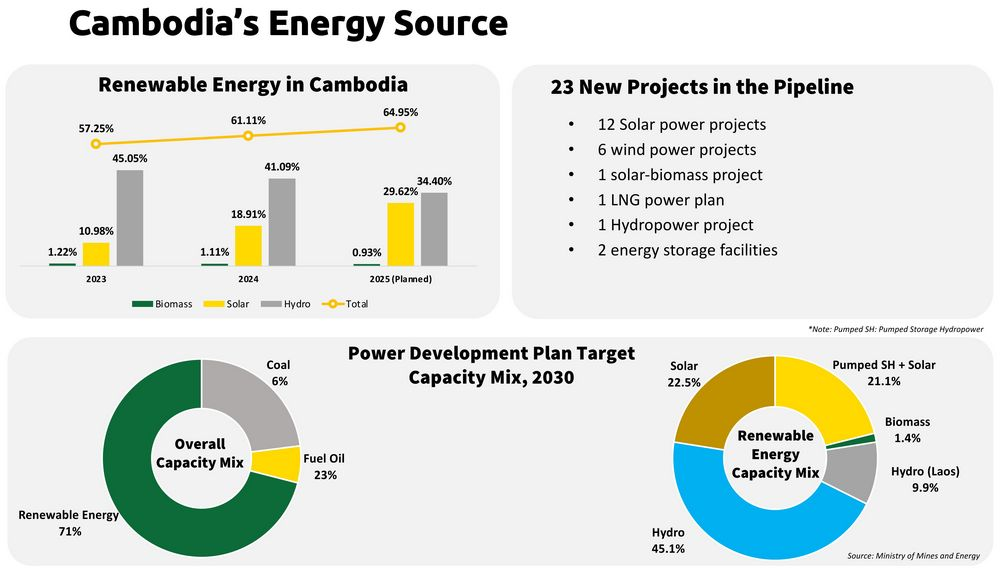
The country’s Power Development Plan targets 71% renewable energy in the overall capacity mix by 2030. The presentation also identifies 23 new energy projects in the pipeline, including 12 solar projects, six wind projects, a solar-biomass project, a hydropower project and two energy-storage facilities.
Why Cambodia?
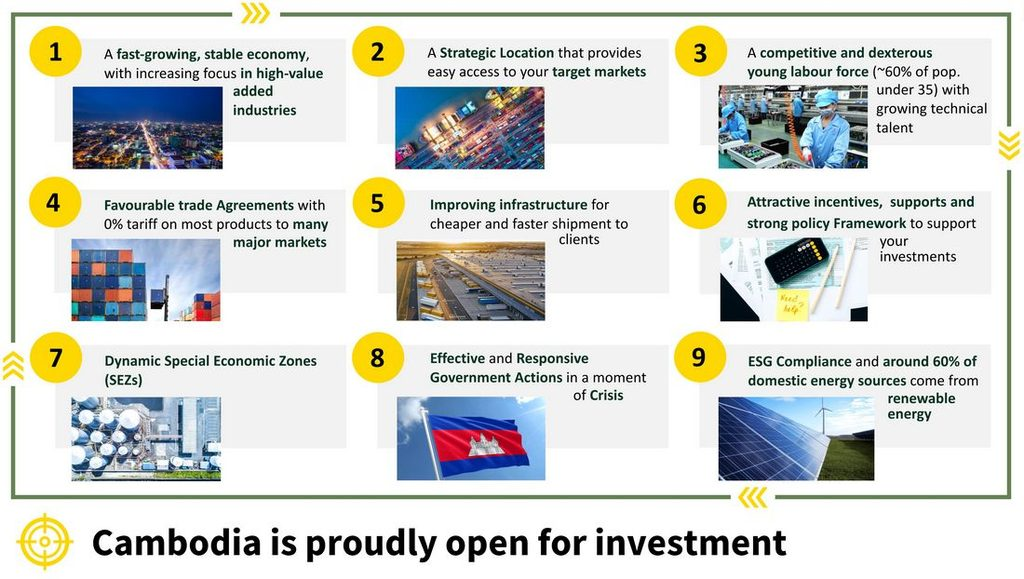
Cambodia’s investment proposition brings together several factors: economic growth, strategic geographic access, a young workforce, expanding infrastructure, Special Economic Zones, investment incentives, trade integration and a growing focus on renewable energy and higher-value-added industries.
For companies considering manufacturing, industrial production, agriculture and food processing, tourism, healthcare, infrastructure, logistics, renewable energy or regional supply-chain operations, Cambodia presents a market worth examining closely.
Cambodia is not only attracting investment — it is building the infrastructure, regulatory framework and industrial ecosystem for the next stage of its economic development.
Baza Nova Management — Your Partner for Investing in Cambodia
Baza Nova Management supports foreign investors in working with the Council for the Development of Cambodia (CDC) — from understanding investment requirements to navigating the application and approval process.
We assist with CDC and QIP procedures, documentation, coordination with relevant authorities, investment incentives, and ongoing project support, helping investors enter the Cambodian market with greater clarity and confidence.
You bring the investment vision. We help make it happen in Cambodia.