

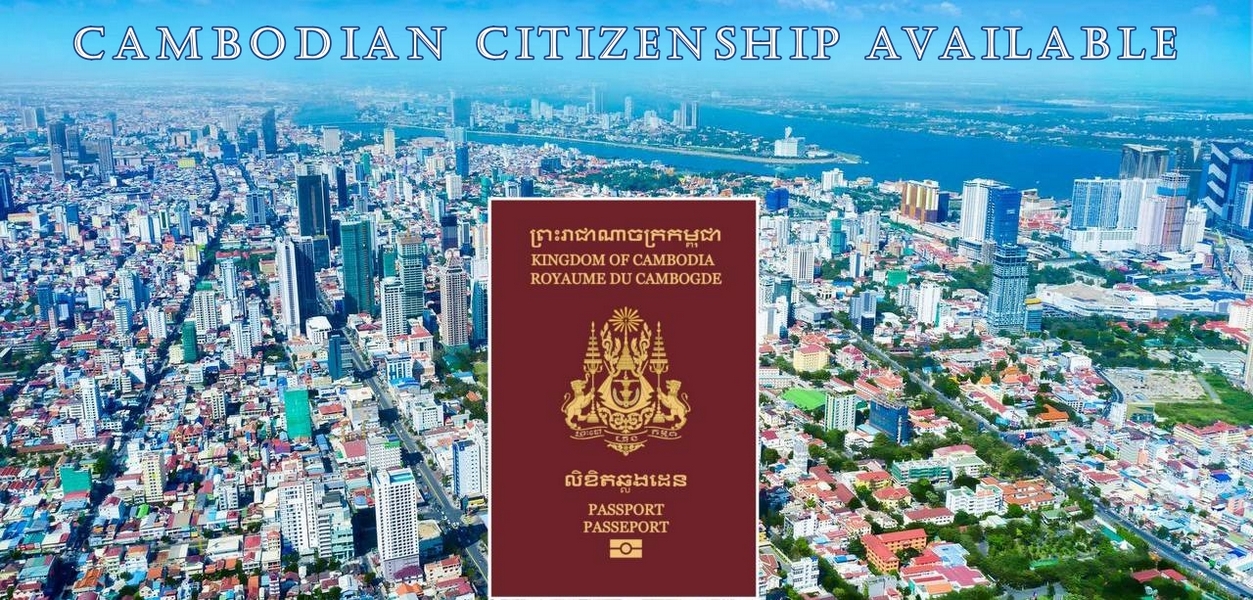
Cambodia, with its rich cultural history and rapidly growing economy, has become an attractive destination for investors, entrepreneurs, and expats in Southeast Asia. Obtaining citizenship opens access to legal, economic, and social benefits, including land ownership and expanded business opportunities.
Why consider Cambodian citizenship?
Legal Rights
Citizens have the right to own land outright (foreigners cannot own land directly).
Economic opportunities
No work permit required, easier to open and run a business without nominee partners.
Travel Benefits
A Cambodian passport provides visa-free or simplified entry to a number of countries.
Cultural integration
Full participation in the social and political life of the country.
What is Cambodian citizenship?
Citizenship is a legal status that allows one to participate in the socioeconomic and political life of a state. Legislation provides for four main ways to obtain citizenship:
1. By birth
- A child whose at least one parent is a citizen of Cambodia.
- In some cases, children born in the country to foreign parents.
2. By marriage
- Foreign spouse of a Cambodian citizen.
- The requirements for the duration of residence and the authenticity of the marriage must be met.
3. By naturalization
- Legal residence in the country for at least 7 years.
- Knowledge of the Khmer language.
- Good reputation and no criminal record.
- Financial stability.
4. Through investments
- Significant contribution to the economy (real estate, infrastructure, state-approved projects).
- Accelerated procedure.
Dual citizenship
Cambodia officially allows dual citizenship.
Who can retain a second citizenship?
- Persons who have acquired citizenship through naturalization, marriage or investment.
- Cambodian citizens who have obtained foreign citizenship.
Advantages
- Access to rights in two countries.
- Enhanced mobility.
- Freedom to conduct business and own assets.
It is important to take into account
- You need to check whether dual citizenship is allowed in your country of origin.
- Tax liabilities may apply in both countries.
Selection criteria
General requirements
- Age from 18 years.
- Legal residence (for naturalization – at least 7 years).
- No criminal record.
Additional requirements for naturalization
- Proficiency in Khmer language (spoken and written).
- Knowledge of the history and culture of the country.
- Confirmed economic activity.
Required documents
Personal documents
- Birth certificate.
- Valid passport.
- Proof of residence.
- Marriage certificate (if required).
Financial documents
- Tax returns.
- Employment contracts or work permits.
- Business licenses and reporting (for entrepreneurs).
Additionally
- Language proficiency certificates.
- Certificate of no criminal record (in Cambodia and country of origin).
Application process
Step 1. Consultation
It is recommended that you consult a lawyer or immigration consultant.
Step 2. Submitting documents
The application is submitted to the Ministry of Internal Affairs or diplomatic missions.
Step 3. Verification
A background check, financial background check and residency check are conducted.
Step 4. Interview and testing
Assessment of knowledge of language and culture.
Step 5. Solution
If approved, a citizenship certificate is issued, after which a passport can be applied for.
Citizenship by Investment
Key Features:
- The minimum investment volume established by the state.
- Confirmation of origin of funds.
- Usually shorter review periods.
This option is popular among entrepreneurs and investors focused on long-term projects in the region.
After receiving citizenship
- Registration of a passport.
- Registration on the electoral lists (if desired).
- Compliance with tax obligations.
- Integration into public life.
Potential difficulties
Delays in processing – it’s important to carefully prepare your documents.
Language barrier – it’s recommended to learn Khmer in advance.
Bureaucratic procedures – legal assistance can significantly speed up the process.
Conclusion
Obtaining Cambodian citizenship is a strategic step for those planning a long-term residence, investment, or business development in Southeast Asia. With proper preparation and compliance, the process is manageable and straightforward.
Contact us – we provide legal advice and services to clients: