

“My name is Svyatoslav Bazanov. Over the past several years, I have been living and working in Cambodia, focusing on investment real estate and regularly organizing investment tours in Phnom Penh and Sihanoukville for global clients.
During this time, I have noticed one recurring pattern: many perceptions of Cambodia are still based either on outdated stereotypes from ten years ago or on fragmented information found online. Yet when people arrive here for the first time, the reality is often entirely different.
That is why I decided to write not a promotional article, but an honest perspective on Phnom Penh through the eyes of someone working inside Cambodia’s real estate market every day.
For years, Phnom Penh existed outside the mainstream investment narrative of Southeast Asia. While regional capital flowed aggressively into Bangkok, Singapore, Ho Chi Minh City and Bali, Cambodia was often perceived as a peripheral frontier market — underdeveloped, opaque and too early for institutional attention.
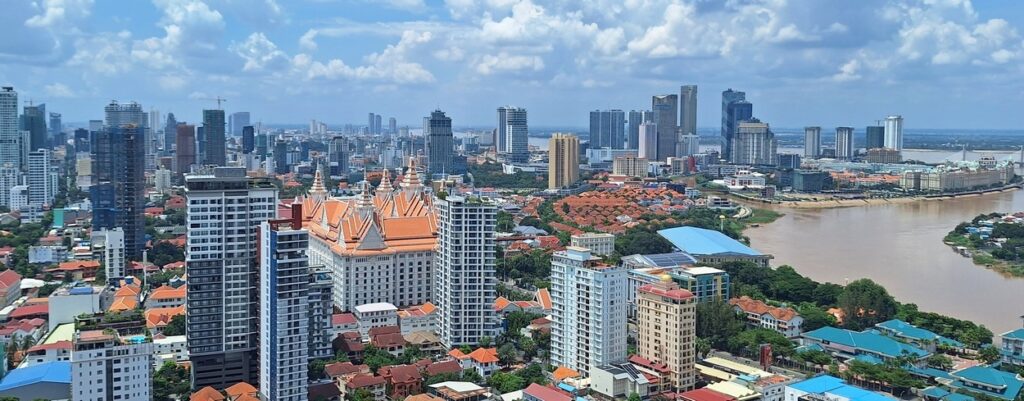
That perception is beginning to change
Today, a growing number of investors are starting to reassess Cambodia not as a speculative outlier, but as a market entering the early stages of long-term structural transformation. And at the center of that shift is Phnom Penh itself.
The real question is no longer whether Cambodia will develop further. The more important question is whether investors are arriving before — or after — the country’s major repricing cycle begins.
The Pattern Investors Repeatedly Miss
In emerging markets, capital appreciation rarely occurs once growth becomes obvious.
By the time international headlines begin describing a city as “the next investment hotspot,” the most asymmetrical opportunities have often already passed. Infrastructure is completed, institutional capital has entered, land prices have adjusted and prime districts become increasingly difficult to access at attractive valuations.
The largest returns are typically generated earlier — during the phase when underlying economic indicators begin shifting, but global perception has not yet fully caught up.
Historically, this pattern has repeated across multiple markets, from Thailand in the 1990s to Vietnam in the 2000s and the United Arab Emirates during its rapid urban expansion cycle.
Professional investors rarely focus only on current real estate pricing. Instead, they examine deeper structural indicators:
- infrastructure development,
- demographic trends,
- industrial growth,
- export expansion,
- urbanization,
- foreign direct investment,
- logistics modernization,
- and middle-class formation.
Real estate appreciation is usually the final stage of a much broader economic process.
- First, infrastructure develops.
- Then businesses expand.
- Then incomes rise.
- Then the property market reprices.
Cambodia increasingly appears to be entering that transitional stage.


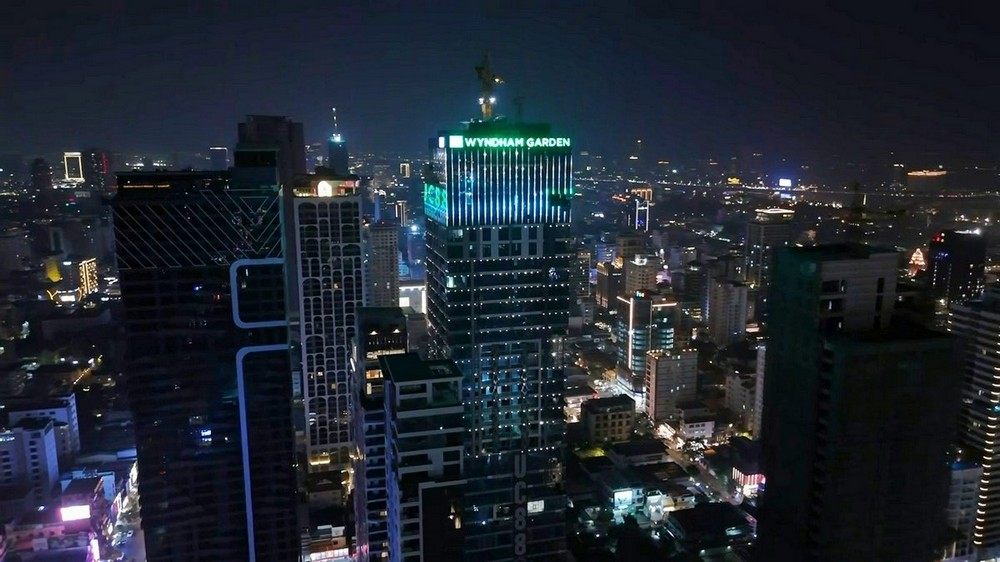
Cambodia’s Shift From Frontier Market to Regional Growth Story
For much of the last decade, Cambodia’s investment appeal was associated primarily with low entry prices. But today, the investment thesis is evolving beyond simple affordability.
What is attracting attention now is the country’s broader macroeconomic trajectory.
Several long-term trends are reshaping the market simultaneously:
- expansion of transport infrastructure,
- development of new logistics corridors,
- industrial diversification,
- growth of special economic zones,
- rising export capacity,
- increasing regional connectivity,
- and continued urban migration into Phnom Penh.
One of the most strategically important developments is the new Techo International Airport, which is expected to significantly strengthen Cambodia’s international connectivity and further accelerate urban expansion south of the capital.
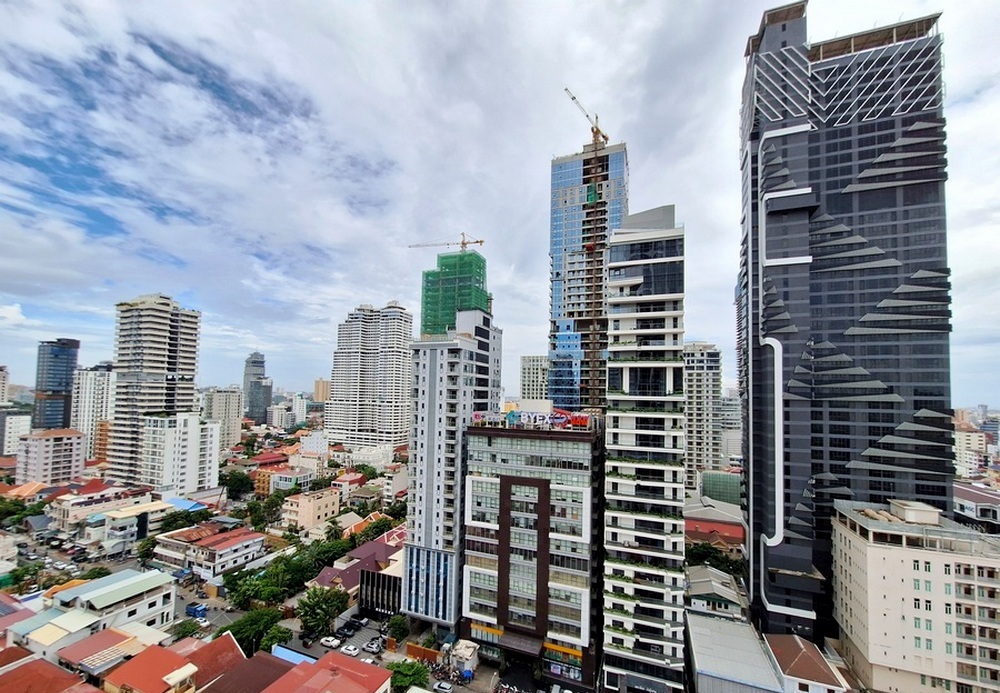
Historically, major infrastructure projects often reshape urban growth patterns long before real estate markets fully reprice around them. Phnom Penh is already beginning to experience that shift.
Areas surrounding Hun Sen Boulevard, Tonle Bassac and Koh Norea are increasingly emerging as new development corridors, supported by both public infrastructure spending and private-sector investment.
Phnom Penh Is No Longer Competing on “Cheapness”
One of the more significant changes within Cambodia’s property sector is psychological rather than numerical.
Phnom Penh is no longer positioning itself merely as a low-cost alternative to Bangkok or Ho Chi Minh City. Instead, it is gradually transitioning into a more mature regional capital with its own investment logic.
The city today already offers many characteristics associated with more developed Southeast Asian markets:
- premium residential developments,
- Grade-A office projects,
- international schools,
- branded hospitality,
- modern retail environments,
- and increasingly sophisticated mixed-use developments.
At the same time, Phnom Penh still retains one characteristic that mature regional capitals largely no longer offer: relatively early-stage pricing.
That combination — improving urban quality alongside comparatively moderate valuations — is precisely what tends to attract early-cycle investors.
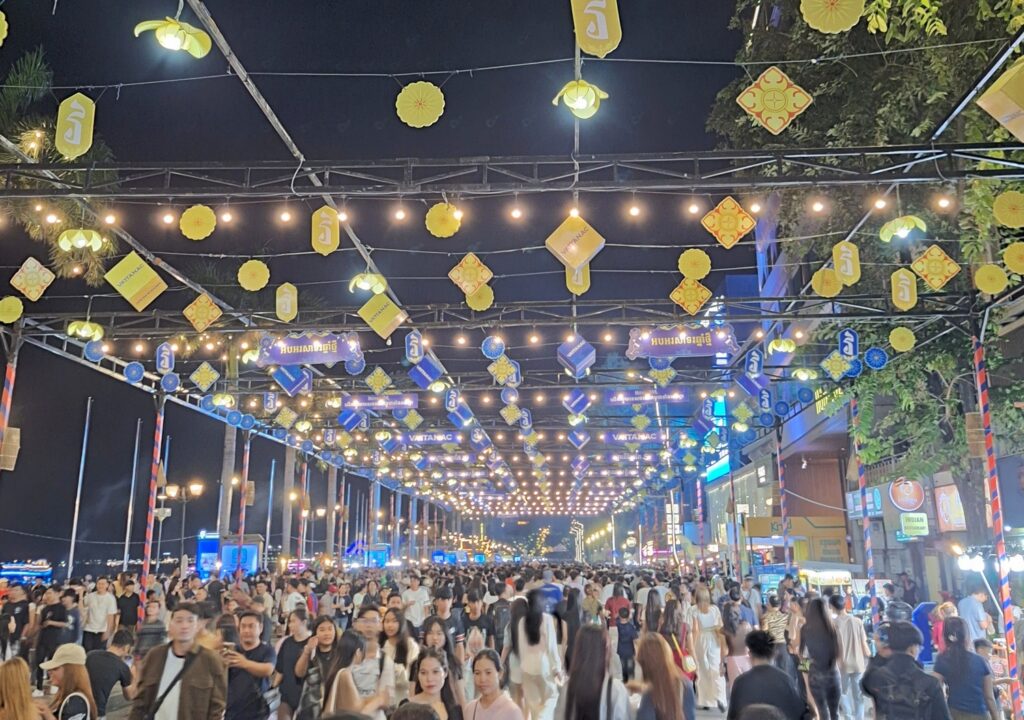
The Demographic Advantage
Cambodia also benefits from one of Southeast Asia’s youngest populations, with an average age estimated at roughly 25 years old.
Demographics matter because urban real estate demand is ultimately driven by household formation, income growth and workforce expansion. Younger populations typically support:
- long-term residential demand,
- retail consumption growth,
- labor force expansion,
- and urbanization.
Phnom Penh’s population continues to expand as migration from provincial regions accelerates, further reinforcing demand for housing, office space and urban infrastructure.
Unlike some neighboring capitals already facing density saturation, Phnom Penh still possesses substantial room for physical and economic expansion.
The Emerging Geography of Investment
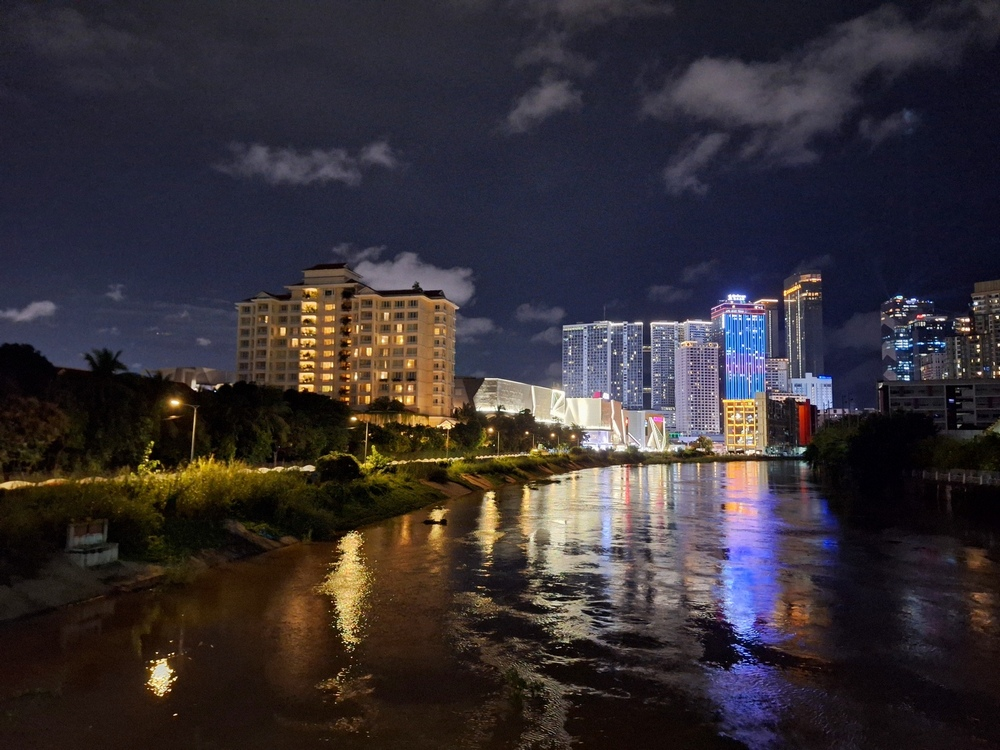
Within Phnom Penh itself, investment activity is becoming increasingly concentrated around several key districts.
Boeung Keng Kang 1 (BKK1) remains the city’s most established premium district, characterized by high expatriate concentration, international businesses, embassies and limited remaining land supply. As a result, pricing resilience in the area has remained relatively strong.
Meanwhile, Boeung Keng Kang 3 (BKK3) is attracting increasing investor attention as a secondary growth corridor. Proximity to BKK1 combined with lower entry prices and ongoing redevelopment activity creates a dynamic similar to what many investors previously targeted in emerging districts of Bangkok or Ho Chi Minh City during earlier growth cycles.
The southern expansion corridor linked to the new airport also represents a major long-term development story, particularly as infrastructure continues improving.

A Two-Tier Real Estate Market Is Emerging
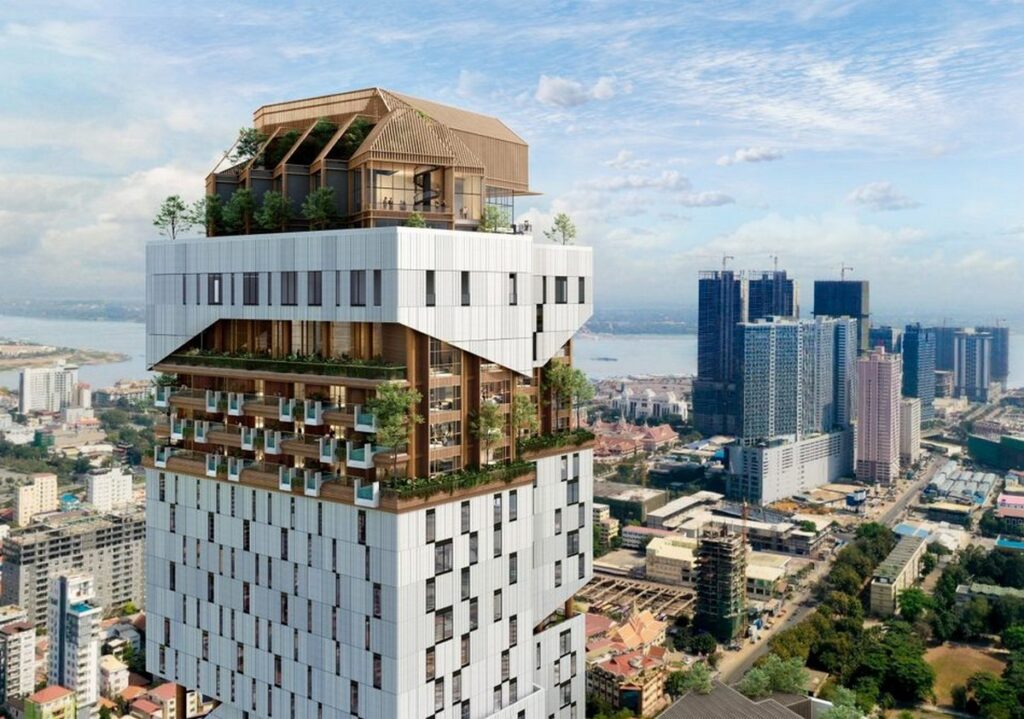
Another important shift is the increasing divergence between Cambodia’s older condominium stock and the new generation of projects entering the market.
The earlier phase of Phnom Penh’s condominium development often focused primarily on speed and speculative demand. Many older projects now face challenges related to management quality, outdated layouts and weaker long-term competitiveness.
In contrast, newer developments increasingly incorporate features aligned with international urban living standards:
- integrated amenities,
- coworking spaces,
- wellness infrastructure,
- professional property management,
- security systems,
- and community-oriented design.
As the market matures, this quality gap is likely to widen further.
Investors are becoming significantly more selective, placing greater emphasis not only on location, but also on developer reputation, construction quality, long-term liquidity and operational sustainability.

The Market’s Most Important Characteristic: Timing
Cambodia is not yet Singapore. Nor is it trying to be.
The country still faces many challenges associated with developing economies: uneven infrastructure quality, regulatory complexity and varying levels of market transparency.
But from an investment perspective, those imperfections are often precisely what create early-stage pricing inefficiencies.
Markets typically deliver their strongest growth not when uncertainty disappears, but during the transition period when structural improvement becomes visible before broad consensus forms around it.
That may be the phase Phnom Penh is entering today.
The Bigger Picture
Ultimately, Cambodia’s real estate story is not fundamentally about cheap condominiums or speculative flipping.
It is about a country moving into a new economic chapter.
When infrastructure expands, exports rise, international business presence increases and the middle class grows, urban real estate markets tend to evolve alongside those changes.
The question facing investors now is less about whether Phnom Penh will continue developing.
The more relevant question is how much of that transformation has already been priced in — and how much still remains ahead.”